
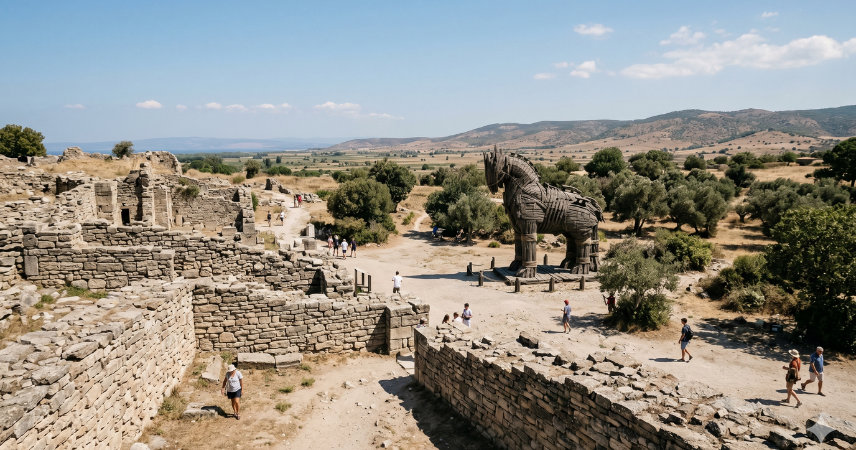
Few places on earth sit at the crossroads of myth and reality quite like Troy Turkey. The ancient city where Homer set his epic tale of gods, heroes, and a ten-year siege is not a figment of literary imagination. It is a real archaeological site in northwest Turkey, and hundreds of thousands of travelers visit it every year.
But is Troy worth visiting for you? This guide breaks down exactly what you will find at the ruins of troy, how to set your expectations, what to prioritize during your visit, and how to decide whether this legendary site deserves a spot on your Turkey itinerary.
Quick answer: is Troy worth visiting?
It depends on what kind of traveler you are. If you are drawn to ancient history, archaeology, or the stories behind Homer’s Iliad, Troy delivers something no other site in Turkey can: a physical connection to one of the most famous stories ever told. For history lovers and myth enthusiasts, the answer is a clear yes.
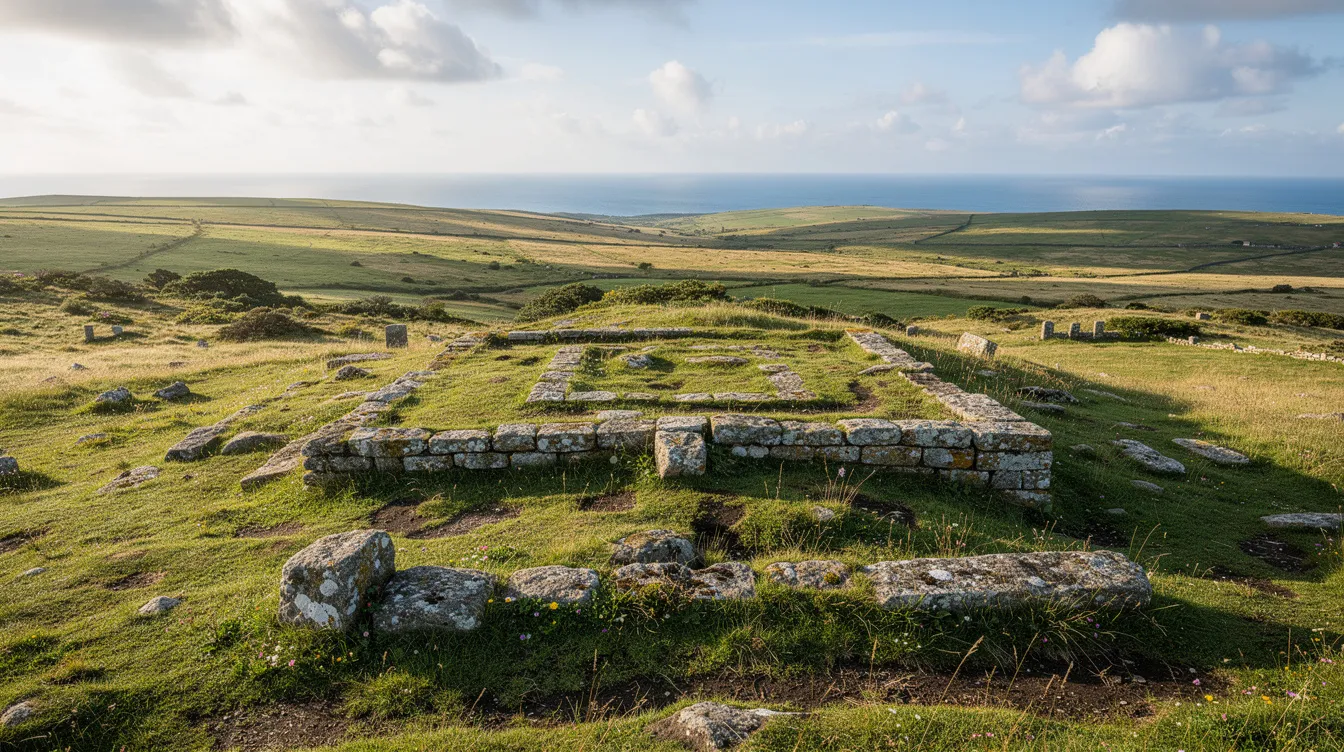
If you are a casual tourist looking for the visual drama of fully reconstructed temples and colonnaded streets, Troy may feel quieter than expected. This is not Ephesus. The ruins are mostly low stone foundations, partial walls, and layered earthworks rather than towering monuments. Troy rewards curiosity more than it rewards the camera.
For families, the large replica wooden horse at the entrance is exciting, but the rest of the site requires framing and imagination. Combining the ruins with the modern Troy Museum and the nearby city of Çanakkale makes the experience significantly richer.
Who will love Troy:
- Fans of ancient Greek myth, Homer, and the trojan war
- Archaeology students and cultural heritage enthusiasts
- Travelers collecting UNESCO World Heritage Sites (Troy has been one since 1998)
- Anyone already visiting Çanakkale or Gallipoli
Who might be underwhelmed:
- Visitors expecting grand, intact temples or amphitheatres
- Travelers with very limited time who prioritize visual “wow factor”
- Those on a rushed day trip from Istanbul without time for the museum
Troy is one of the world’s most significant archaeological sites, with 4,000 years of continuous history compressed into a single mound. It is most rewarding when you arrive knowing what to expect.
Myth vs reality: ancient Troy and the Trojan War
The story most people know goes something like this: a trojan prince named Paris abducts Helen from Sparta, prompting a greek army led by Agamemnon to sail across the Aegean Sea to recover Helen. The war drags on for ten years. Achilles’ anger dominates the battlefield. Eventually, the greek forces build a famous trojan horse to sneak inside the city’s defences and end the siege.
Homer’s Iliad, written around 750 BC, covers only a small portion of this epic tale, focusing on the wrath of Achilles during the final year of the conflict. The Iliad describes Troy as a wealthy and fortified city, powerful enough to resist the mycenaean civilization’s finest warriors. Interestingly, the wooden trojan horse story does not appear in the Iliad at all. It comes from the roman poet Virgil’s Aeneid and other later sources.
For centuries, Troy was believed to be a myth until Heinrich Schliemann’s discovery at Hisarlık in the 1870s revealed that a real city had indeed existed at the location ancient sources described. The ancient city located at Hisarlık, near the narrow strait of the Dardanelles in modern day turkey, turned out to have been inhabited for millennia.
Today, archaeologists broadly agree that layers Troy VI and Troy VIIa (roughly 1750–1180 BCE) are the strongest candidates for the late bronze age city that may have inspired Homer’s stories. Troy VI existed from 1750 BC to 1300 BC as a major city with impressive fortifications. Troy VIIa, destroyed around 1180 BC in what appears to have been a violent event, aligns chronologically with the traditional dating of the trojan war. Hittite diplomatic texts even reference a place called Wilusa, linguistically close to the Greek Ilion, reinforcing connections between homeric troy and the archaeological record.
Knowing these stories before you arrive transforms the experience. Walking among the ruins is not about seeing spectacle. It is about standing where legend and evidence overlap.
What to expect at the ruins of Troy (and why expectations matter)
The troy archaeological site is subtle. If you arrive expecting the Library of Celsus at Ephesus or the travertine terraces of Pamukkale, you will need to recalibrate. What you will find is a tell, a modest mound roughly 200 meters across and about 15 meters high, formed by thousands of years of cities built one on top of another.
The site consists of nine layers of occupation, sometimes counted as ten when including a preliminary “Troy 0” phase. Ancient Troy is believed to have been occupied continuously from around 3000 BCE through Roman times. Each layer represents a different city, a different era, a different set of people living, building, and sometimes dying violently on the same patch of earth.
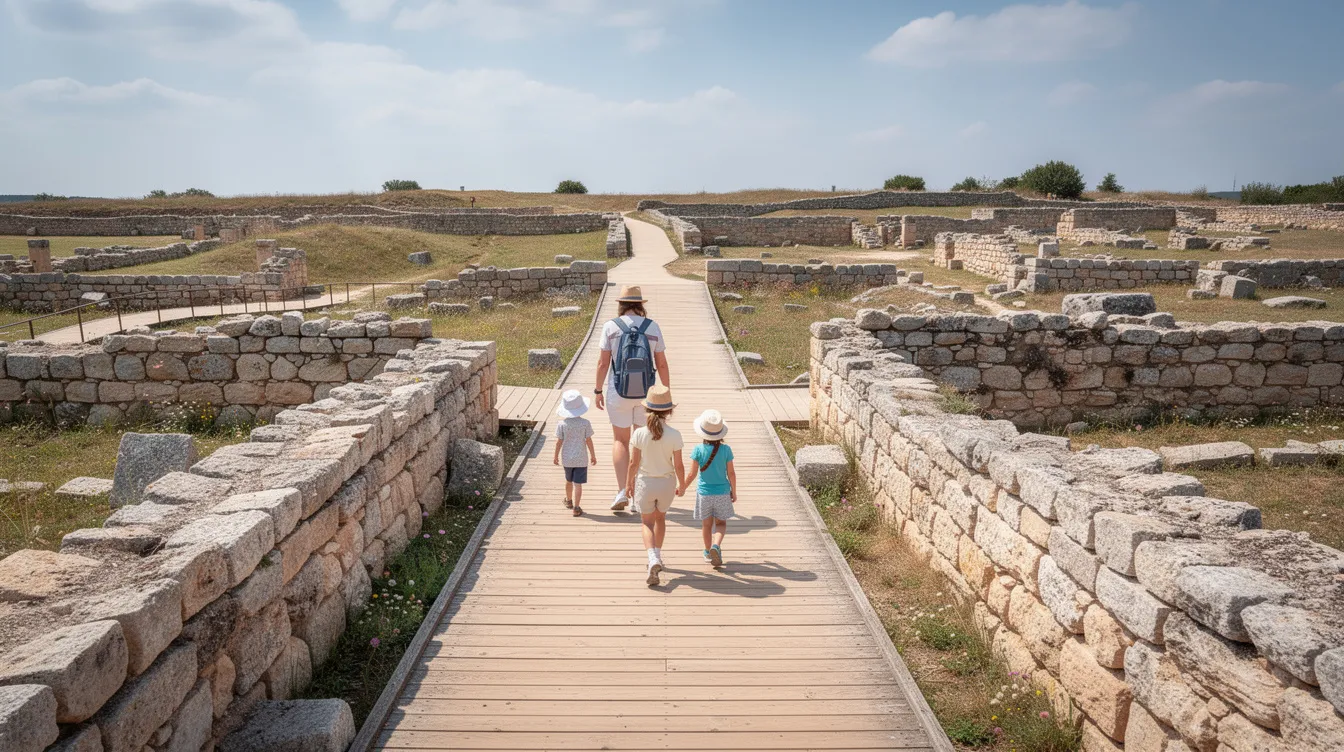
Heinrich Schliemann excavated Troy starting in 1870, cutting a massive trench through the mound that, while revealing important finds, also destroyed significant archaeological context. Modern excavations by scholars like Manfred Korfmann have refined our understanding considerably. Today, a walking circuit leads visitors past labelled sections: early citadel walls from Troy I, the deep cut of Schliemann’s trench through Troy II, the massive fortifications of Troy VI–VII, and the Roman civic buildings of Troy IX. Wooden boardwalks and interpretation panels help visitors navigate.
The views from the hill over the Troad plain toward the Dardanelles are striking. You can see where ancient fleets would have anchored, where mount Ida rises in the distance, and why this location at the western end of Anatolia mattered so much strategically.
A good guide dramatically improves the experience. Without one, the layered ruins can feel confusing. At Alpaca Travel, we pair travelers with English-speaking guides who bring the city layers to life and connect the archaeological remains to the stories visitors already know.
The nine layers of the ancient city
The troy ancient city is not just one city. It is at least nine cities stacked on top of each other, each identified by roman numerals. The site has ten distinct layers documenting the transition between early Anatolian civilizations and the Mediterranean world. Here is a simplified overview:
| Layer | Approximate Dates | Key Features |
|---|---|---|
| Troy I | ~3000–2550 BCE | Small fortified citadel, earliest defensive walls |
| Troy II | ~2550–2300 BCE | Wealth, long-distance trade, destroyed by fire |
| Troy III–V | ~2300–1750 BCE | Modest rebuilds, domestic structures |
| Troy VI | ~1750–1300 BCE | Major bronze age city, massive sloping walls, possible palace |
| Troy VIIa | ~1300–1180 BCE | Crowded housing, violent destruction layer |
| Troy VIIb | ~1180–950 BCE | Post-destruction reoccupation, cultural shifts |
| Troy VIII | ~700–85 BCE | Greek settlement known as Ilion, temples, civic features |
| Troy IX | ~85 BCE–500 AD | Roman civic buildings, theatre, sanctuaries |
Troy I dates back to around 3000 BCE as a small fortified citadel of less than one hectare. Troy II was built around 2550 BCE and destroyed around 2300 BCE, but not before accumulating significant wealth from trade networks stretching across the Aegean. Troy VI was destroyed around 1300 BCE, possibly by earthquake, while Troy VIIa’s destruction around 1180 BC shows clearer signs of armed conflict. Troy VIII was established around 700 BC as a Greek settlement that revived the city’s ancient name.
The archaeologists who defined these levels read like a who’s who of Mediterranean archaeology: frank calvert first identified Hisarlık as the likely site of Troy, Schliemann made it famous (and damaged it), Wilhelm Dörpfeld refined the stratigraphy, Carl Blegen brought modern methods, and Korfmann expanded excavations to reveal the lower town.
Condition of the ruins vs. other ancient sites in Turkey
Compared to sites like Pergamon with its dramatic acropolis, Ephesus with its reconstructed facades, or Pamukkale with its natural spectacle, the ancient ruins at Troy are less visually imposing. No complete large theatres, few standing columns, limited temple remains.
But Troy appeals through something those sites cannot match: 4,000 years of layered history visible in a single mound, and a connection to one of the most influential stories in Western literature. The city’s history encompasses early Anatolian bronze age cultures, Mycenaean-era conflict, Greek religious pilgrimage, and Roman imperial grandeur, all in one compact location.
Be honest with yourself. Some visitors find Troy underwhelming when they expect intact streets and buildings. Others find walking among the exposed stratigraphy, imagining the city appears as it once did in each era, deeply moving. Erosion, Schliemann’s destructive early excavations, and the sheer age of the earliest layers all affect what remains visible today.
Top things to see at Troy Turkey
If you have one to two hours at the archaeological site of ancient Troy, here are the highlights to prioritize. Each stop takes roughly 5–15 minutes, and together they cover the site’s full chronological range.
The replica wooden horse at the entrance
The large wooden horse near the site entrance is the first thing most visitors see. It is a modern reconstruction, not an authentic artifact, but it serves as a powerful symbolic introduction to the myths that made this place famous. The Trojan Horse is a cultural emblem of the region’s mythological roots.
Visitors can climb inside or onto a platform for photos, making it a fun stop for families. If you are visiting troy with children, start here to build excitement before heading into the more interpretive ruins.
Worth noting: the wooden horse on the Çanakkale waterfront, the prop built for the 2004 film starring Brad Pitt, is a separate attraction. The one at the site is older and simpler, but equally photogenic.
City walls, gates, and towers
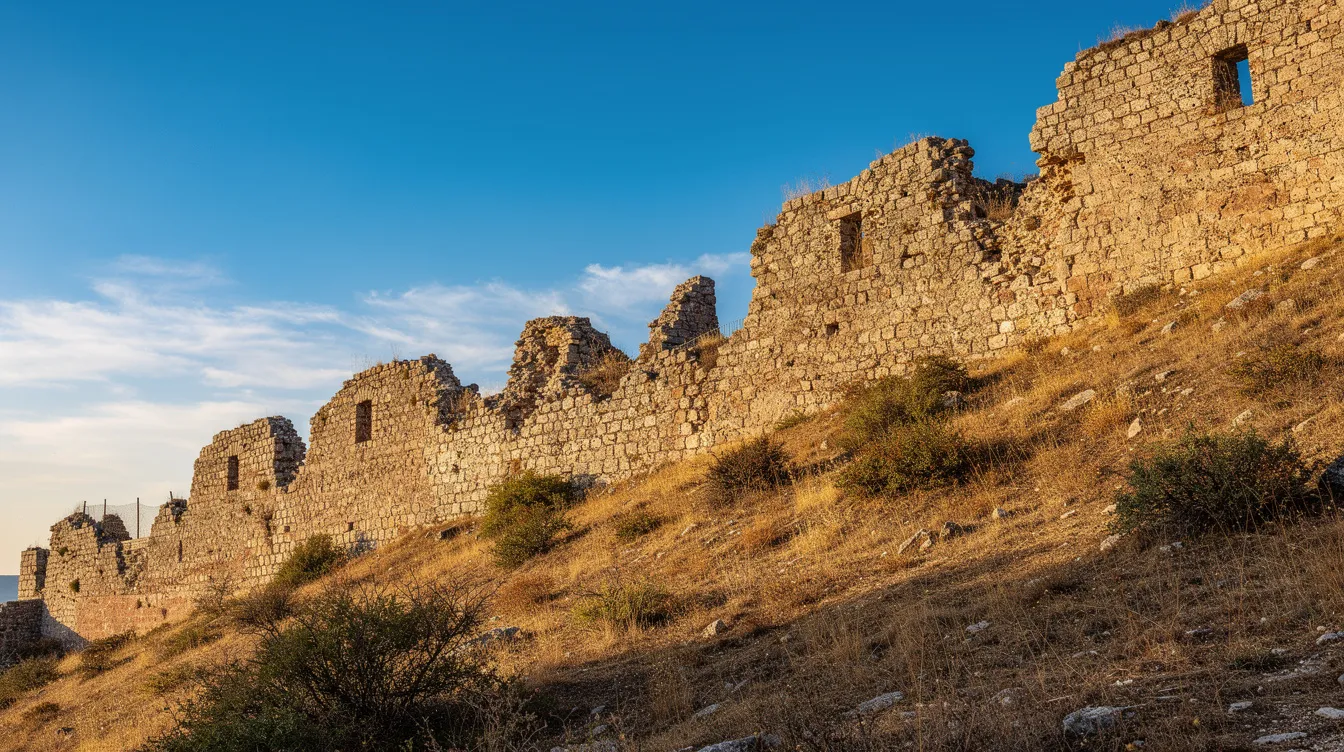
The massive defensive walls dating back to 1700 to 1275 BC are the most impressive ancient ruins on site. The sloping limestone fortifications of Troy VI–VII, with walls reaching roughly six meters high and over four meters thick in places, match descriptions of the city of Troy in ancient Greek sources.
Pause at the south gate and the northeast bastion. From these vantage points, you can imagine defenders watching for approaching ships along the turkish aegean coast. These city walls are among the first major city appears remains you reach once inside the main circuit path. The southern entrance to the citadel mound gives a strong sense of how the city’s defences functioned.
The lower town and residential areas
The lower city of Troy was discovered in the late 1980s, revealing that Troy was not just a small fortress but a significant urban center. The lower town extended well beyond the citadel hill, with house foundations, streets, and grain storage pits suggesting a substantial population.
Only about two to three percent of the lower town has been excavated, but what is visible gives a concrete sense of daily life in the bronze age city. Signs explain domestic structures and storage areas, helping visitors connect the ruins to the real people who lived here. This is where the ancient site moves beyond myth and into everyday human experience.
Roman theatre and later remains
The small Roman theatre, or odeon, from Troy IX still has tiered seating partially visible. It dates from the period when the site functioned as a Greek and Roman pilgrimage destination, where travelers came to honor the legendary heroes of ancient troy and visit the council house and sanctuaries.
This phase reflects the city’s later life as greek ilion, a center of cultural memory and religious devotion. Other late features include remains of public buildings and a late antique structure uncovered on the hill. Contrasting the Bronze Age citadel with the Roman civic architecture powerfully illustrates Troy’s long urban story, showing that this was never just one city but many cities layered through time.
The Troy Museum: why it can make the trip worth it
The Troy Museum, opened in 2018 near tevfikiye village about 800 meters from the ruins, is a major reason many travelers feel visiting troy is worthwhile even if the ruins alone seem modest.
The museum houses over 40,000 artifacts from 4,000 years of occupation at the ancient city of troy and surrounding historical sites in the Troad region. Its award-winning contemporary design descends through multiple levels, symbolically taking visitors deeper “into” time as they move through the building. A rooftop terrace offers views toward the Dardanelles and the Troad plain.
The museum earned the European Museum of the Year Special Appreciation Award in 2020, and its multi-level layout, interactive displays, and carefully curated timeline make it far more than a standard regional collection. For many visitors, the museum transforms Troy from “interesting but confusing ruins” into “one of the most meaningful historical sites I have seen.”
Plan for one to two hours inside the museum. Some day tours from Istanbul or Çanakkale skip it, which is a significant missed opportunity. At Alpaca Travel, our guided visits always include both the museum and the site with English-speaking explanations.

Exhibits not to miss
The museum’s collection spans the full timeline of Troy’s occupation. Key pieces to look for include:
- Early Bronze Age pottery and metalwork from Troy I and Troy II, including gold jewelry that hints at the city’s ancient trade wealth
- Weaponry and sling projectiles from Troy VI–VII, connecting directly to the late bronze age destruction layers
- Marble statues and reliefs from the Roman period, including a striking statue of Triton
- Coins, inscriptions, and sarcophagi from the Hellenistic and Roman eras
- Interactive multimedia displays that connect homer’s epic poem narratives to archaeological evidence
Labels are primarily in Turkish and English. The museum is particularly enjoyable for travelers who love timelines, curated storytelling, and seeing how the only evidence we have connects mythic memory to physical objects.
Is Troy worth visiting? Who will enjoy it most
Here is the honest verdict. Troy is not the most photogenic ancient site in Turkey. It will not compete with the visual drama of Ephesus or the surreal landscapes of Cappadocia. But it offers something those places cannot: a direct, physical link to one of humanity’s oldest and most influential stories.
Pros:
- World-famous name from ancient Greek literature and global mythology
- Unique nine-layer archaeological site spanning 4,000 years
- Excellent Troy Museum with rich exhibits and modern design
- Proximity to Gallipoli battlefields and Çanakkale
- Views over the Dardanelles and toward the black sea trade route
- Designated a historical national park and UNESCO World Heritage Site
Cons:
- Troy ruins are low and fragmented, less visually striking than other ancient sites
- Can feel rushed and confusing on long day trips from Istanbul (a one-day tour from Istanbul to Troy lasts roughly 18 hours round trip)
- Interpretation can be confusing without a guide
- Limited shade makes summer visits tiring
- Some archaeological periods are barely visible on site
Troy is especially worth it for history and archaeology enthusiasts, UNESCO site collectors, and travelers already planning to stay in Çanakkale. More casual tourists focused on monumental ruins might prioritize Ephesus, Pamukkale, or central anatolia destinations like Cappadocia instead.
When Troy deserves a spot on your Turkey itinerary
Troy fits naturally into several trip formats:
- A self-drive trip along the turkish aegean coast from Istanbul southward
- A multi-day cultural tour: Istanbul → Gallipoli → Troy → Pergamon → Ephesus → Pamukkale → Cappadocia over 10–14 days
- A return visit to Turkey focused on ancient history and archaeological excavations beyond the standard highlights
If your first trip to Turkey is limited to Istanbul and Cappadocia with only five or six days, Troy might reasonably be left for a future, deeper exploration. But if you have 10 days or more, Troy adds irreplaceable depth.
Practical tips for visiting Troy Turkey
Planning a visit to turkey troy is straightforward once you know the logistics. The site and museum together typically require half a day. Combining them with Çanakkale or Gallipoli can fill a full, rewarding day.
How to get to Troy from Istanbul and Çanakkale
Troy is located about 20 miles (roughly 30 km) southwest of Çanakkale and approximately a 6-hour drive from Istanbul depending on your route and whether you take the 1915 Çanakkale Bridge or a ferry crossing.
Your main options:
- Organized day tours or multi-day excursions from Istanbul that handle all logistics
- Bus from Istanbul to Çanakkale (5–6 hours, roughly €10–18), then local minibus or taxi to the site
- Self-drive via the 1915 Çanakkale Bridge (about 4 hours), following signs to “Troya / Truva” from Çanakkale
- Private transfers arranged through Alpaca Travel, with a English-speaking driver and guide
Independent travelers can park near the visitor center at Tevfikiye. The scenic ferry crossings over the Dardanelles add charm to the journey, but check up-to-date schedules before your trip.
Tickets, opening hours, and how long to spend
The archaeological site and the Troy Museum charge separate entrance fees. Entry to the troy ruins has historically been around 25 Lira for adults, though prices are updated regularly, so check current rates and consider the Museum Pass Turkey for savings across multiple sites.
Opening hours typically run from 8:30 AM to 7:30 PM in summer (April–October) and 8:30 AM to about 5:30 PM in winter (November–March). Plan for approximately one to two hours at the ruins plus one to two hours at the museum.
Most independent visitors should allow at least half a day door-to-door from Çanakkale, accounting for transport and a relaxed pace. Guided tours in English help maximize understanding when time is limited.
Best time of year and day to visit
Spring (April–June) and autumn (September–October) offer the most pleasant conditions: mild temperatures, manageable crowds, and good light for photography. The Hisarlık hill is exposed with limited shade, making summer afternoons uncomfortable.
Winter visits are quieter but the region near the Dardanelles can be windy and rainy. Bring waterproof layers if visiting between November and March. To avoid peak hours when large bus tours arrive, aim for early morning or late afternoon.
What to wear and bring to the archaeological site
Practical recommendations for an unforgettable journey through the ruins:
- Sturdy walking shoes (paths are gravel and wooden boardwalks with some uneven ground)
- Hat and sunscreen, especially from May through September
- Refillable water bottle (facilities on site are basic)
- Light layers depending on season
- A printed plan of the ancient city of troy or an offline map, since mobile signal can be patchy
For families with children, frame the visit as a treasure hunt through ancient ruins and stories rather than expecting a playground experience. The wooden horse is a great opening act; the rest rewards imagination and storytelling.
Combining Troy with Çanakkale, Gallipoli, and the Dardanelles
Many travelers visit Troy as part of a wider exploration of Çanakkale province, the Dardanelles Strait, and the Gallipoli battlefields. The narrow strait linking the Aegean Sea and black sea has made this region strategically vital from the Bronze Age through World War I.
A well-paced day might include morning at the Troy Museum and ruins, lunch in Çanakkale (locals in Turkey are known for their hospitality and warm welcome, and the waterfront restaurants are excellent), and an afternoon at Gallipoli memorial sites or exploring Çanakkale’s old quarter.
Alpaca Travel organizes English-language circuits that combine Troy, Gallipoli, and other historic sites with boutique accommodation in the region, ensuring you experience the area at a comfortable pace rather than rushing through.
Views over the Dardanelles and towards the Black Sea route
From viewpoints near Çanakkale and Kepez, you can appreciate the Dardanelles Strait bustling with modern shipping traffic. This narrow strait, connecting the Aegean and Black Sea, was precisely why ancient Troy mattered as a gateway city for trade.
Controlling this passage meant controlling the flow of goods between the Mediterranean world and the regions around the black sea. The strategic geography that ancient Greek and Hittite sources described is still visible in the landscape today. Photographers should plan for late afternoon light over the strait and the Troad countryside for the best results.
Alpaca Travel: how we include Troy in our cultural itineraries
At Alpaca Travel, we are a English-speaking travel agency specializing in cultural and history-focused tours across Turkey. We know that visiting troy is most rewarding when it is woven into a thoughtfully paced itinerary rather than treated as a rushed checkbox.
We typically integrate Troy into multi-day routes that also visit Istanbul, Gallipoli, Pergamon, Ephesus, Pamukkale, and Cappadocia. Our advantages for English-speaking travelers include:
- Expert guided explanations at the archaeological site and the Troy Museum in English
- Boutique and cave-style hotel accommodations at other stops
- Carefully paced itineraries that avoid exhausting marathon drives
- Personalized attention for couples, small groups, and individual travelers
Example itinerary: Our 13-day “3 Mares” route includes Troy as a key stop on a journey from Istanbul along the Aegean coast through Gallipoli, Pergamon, Ephesus, and Pamukkale before heading to Cappadocia. Troy fits naturally between Gallipoli and Pergamon, allowing a full morning at the ruins and museum without feeling hurried.
If you are still unsure whether Troy deserves a place on your trip, contact us. We can give you personalized advice based on your interests, available time, and what kind of experience you are looking for.
Conclusion: is Troy worth visiting in Turkey for you?
So, is Troy worth visiting? If you value story, archaeology, and historical context over monumental ruins, the answer is yes. Troy plus the Troy Museum offers a powerful experience for anyone fascinated by ancient history, the trojan war, and how myth transforms into material evidence across millennia. This is the real city behind Homer’s epic poem, and standing on its walls connects you to something few other places on earth can offer.
If your priority is visually spectacular ancient cities with standing temples and colonnaded streets, you may want to prioritize Ephesus or Pergamon and save Troy for a future, more history-focused trip. But if you have the time and the curiosity, Troy rewards you in ways that photographs alone never capture.
See Troy as part of a broader exploration of the Aegean coast, Çanakkale, and Gallipoli rather than as a standalone, rushed day trip from Istanbul. And if you want help designing an itinerary where Troy fits naturally and delivers the right depth for your interests, Alpaca Travel is here to help you plan your trip in English, every step of the way.
Comments