
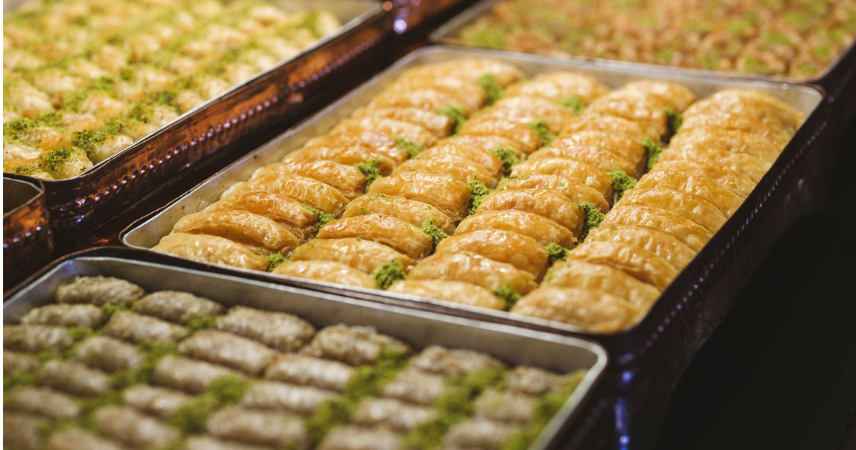
If you think Turkish cuisine begins and ends with kebabs and turkish pizza, prepare for a revelation. Turkish desserts are renowned for their rich sweet profiles, carrying centuries of culinary heritage from the Ottoman Empire through every syrup-soaked bite and silky spoonful. Many traditional turkish desserts date back to the Ottoman Empire, where palace kitchens transformed simple ingredients into edible art that sultans craved.
Turkish desserts generally fall into two broad families. First, the syrup-soaked pastries-think crispy phyllo dough drenched in honey like sugar syrup, generously filled with chopped nuts. Second, the milk pudding category-cool, gentle, and surprisingly complex. Turkish desserts often have nutty profiles and feature syrupy filo creations, but the milk-based side tells an equally compelling story.
This turkish desserts guide walks you through 12 essential sweets, from famous turkish desserts to hidden regional treasures. Whether you’re visiting Istanbul for the first time or exploring deeper into Anatolia, these are the best turkish desserts worth seeking out. Offering sweets symbolizes warmth and generosity in turkish hospitality, and understanding what you’re eating makes every bite more meaningful.
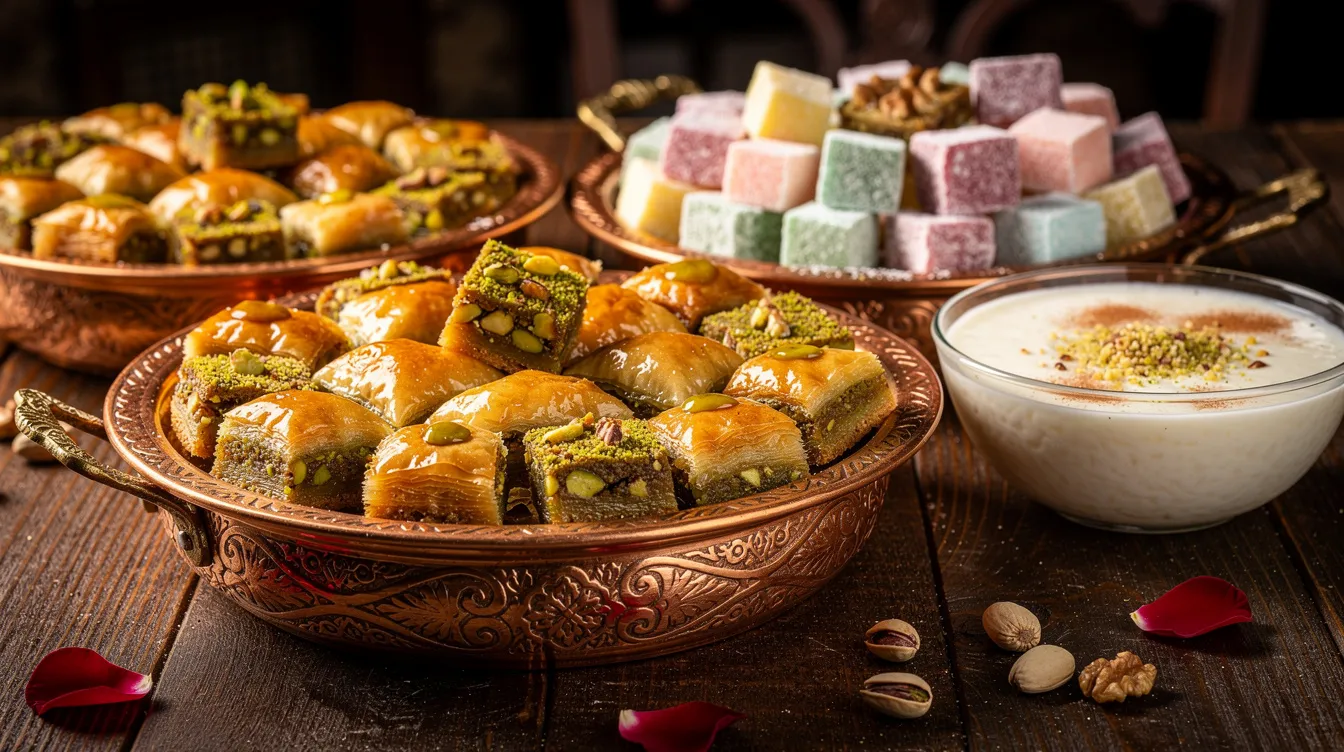
How We Chose the Best Turkish Desserts
Narrowing down turkish sweets to just twelve required serious criteria. Here’s what guided our selection:
- Cultural significance: Traditional turkish desserts are often served as part of cultural hospitality. Turkish desserts are integral to celebrations and social gatherings-from weddings to religious holidays.
- Authenticity: We prioritized desserts made with traditional recipe methods, not mass-produced imitations.
- Traveler accessibility: Every dessert on this list can be found in major cities, though some shine brightest in their region of origin.
- Flavor diversity: We balanced intensely sweet creations with milder options, and included both street food favorites and palace-born delicacies.
- Regional representation: From Gaziantep’s pistachio-laden pastries to Hatay’s cheese-filled specialties, Turkey’s dessert geography is vast.
For a deeper dive into Turkish gastronomy beyond desserts, our full food guide covers everything from savory dishes with minced meat to breakfast spreads.
Top 12 Turkish Desserts Every Traveler Must Try
1. Baklava
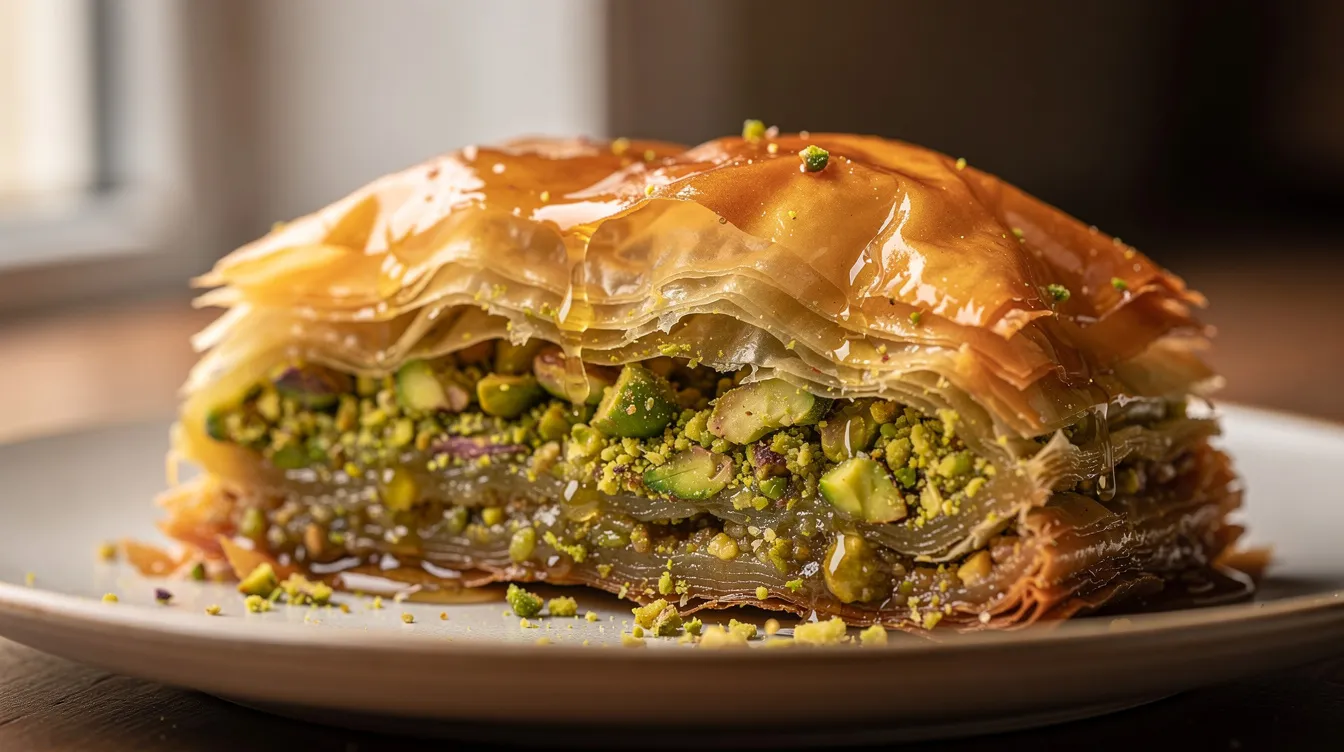
The undisputed king of traditional turkish desserts. Baklava is made with layers of phyllo dough and nuts-thin layers of buttery pastry stacked with ground pistachios, walnuts, or almonds, then drenched in sweet syrup. Baklava is often filled with pistachios, walnuts, or almonds depending on the region and the baker’s specialty. Baklava has been recognized as a Protected Geographical Indication, cementing its place in culinary heritage.
Why It Stands Out
The magic of pistachio baklava lies in the contrast: shattering, paper-thin phyllo gives way to fragrant nut layers, while the sugar syrup binds everything into a sticky, golden brown masterpiece. Every bite delivers crunch, sweetness, and the earthy richness of roasted nuts in perfect harmony.
Best For
First-time visitors to Turkey and anyone wanting the classic dessert experience. Baklava is a symbol of hospitality in turkish culture-you’ll find it offered at every celebration, negotiation, and family gathering.
Key Strengths
- Gaziantep is the baklava capital of Turkey, where bakers use local pistachios that are smaller, deeply green, and intensely aromatic
- Karaköy Güllüoğlu is famous for its baklava in Istanbul-a must-visit for any sweet tooth
- Multiple varieties exist: traditional pistachio, walnut, almond, and even chocolate baklava as a modern variation with a modern twist
- Taslı Baklava is another popular variation made with finely chopped nuts and syrup
- Sutlu nuriye is a milk-based baklava variant that emerged during the 1980s when pistachio prices rose, using hazelnuts and milk instead
Possible Limitations
- Can be overly sweet for some palates, especially versions heavy on syrup
- Quality varies significantly between shops-look for real clarified butter (not margarine) and paper-thin sheets
2. Künefe
A sizzling, cheese-stretching spectacle from southern Turkey. Künefe is made with shredded dough and cheese-specifically tel kadayıf (shredded pastry) sandwiching mild cheese, cooked in a small copper pan with melted butter until golden, then soaked in hot sweet syrup. Künefe originated from the Hatay region of Turkey, where it holds Protected Geographical Indication status.
Why It Stands Out
This is not just a dessert-it’s a performance. The combination of savory, stretchy cheese and crunchy, syrup-soaked pastry creates a texture experience unlike anything in middle eastern or Western pastry traditions. Topped with ground pistachios and sometimes clotted cream, it’s dramatic in every sense.
Best For
Adventurous food lovers seeking unique texture combinations. If you’ve eaten every chocolate cake and layered pastry imaginable and want something genuinely different, künefe is your answer.
Key Strengths
- Dramatic presentation served sizzling hot, traditionally served in copper pans
- Perfect contrast between crispy shredded pastry and molten cheese
- Regional specialty from Hatay province with authentic roots
Possible Limitations
- Must be eaten immediately while hot-delay turns it soggy
- Not widely available outside Turkey in its authentic form; the cheese and technique are region-specific
3. Turkish Delight (Lokum)
The most globally recognized sweet treat from Turkey. Lokum, or turkish delight, is made with starch and sugar, flavored with rose water, orange blossom water, lemon juice, or mastic, and often studded with pistachios, walnuts, or chopped dates. Hacı Bekir is renowned for its Turkish delight in Istanbul, operating since 1777 and setting the gold standard for lokum turkish delight.
Why It Stands Out
With a history spanning over 200 years, this is the most famous dessert in Turkey’s repertoire. The chewy texture-soft, slightly resistant, dusted in powdered sugar-is immediately recognizable. It’s more than just a dessert: turkish delight is often served with coffee, enhancing social interactions and turning a simple cup into a ritual.
Best For
Souvenir hunters and those wanting the traditional turkish coffee pairing experience. You’ll find it in gift shops, bazaars, and specialty confectioners throughout the country.
Key Strengths
- Endless flavor varieties: rose, pomegranate, pistachio, hazelnut, even chocolate version options
- Long shelf life makes it perfect for travel souvenirs
- The quintessential pairing with turkish coffee
Possible Limitations
- The chewy texture can be unusual for newcomers expecting something firmer or softer
- Tourist areas often sell low-quality versions made with excessive starch and artificial flavors
4. Fırın Sütlaç (Baked Rice Pudding) – Turkish Desserts
Comfort in a clay dish. Sütlaç is a creamy rice pudding baked until caramelized-the turkish rice pudding tradition taken to its highest form. Sütlaç is baked rice pudding with a caramelized top, creating a gorgeous contrast between the burnished surface and the cool, creamy texture beneath.
Why It Stands Out
While rice pudding exists worldwide, the turkish version distinguishes itself with that blistered, golden brown top achieved through oven baking. The caramelized layer cracks under your spoon to reveal smooth, subtly sweet pudding beneath.
Best For
Those preferring lighter, less sweet desserts after a heavy meal of turkish food. It’s a beloved dessert across all demographics in Turkey.
Key Strengths
- Comforting and familiar flavors with a distinctly Turkish execution
- Traditionally served hot from the oven or served cold from the fridge-your choice
- Not overly sweet, making it ideal after rich main courses
Possible Limitations
- May seem plain compared to ornate, syrup-drenched turkish sweets
- Quality depends heavily on preparation technique and dairy freshness
5. Tavuk Göğsü (Chicken Breast Pudding)
Here’s where Turkish desserts get genuinely surprising. Tavuk Göğsü contains finely shredded chicken breast blended into a silky milk pudding-a concept that baffles visitors until they taste it. The shredded chicken acts not as a flavor agent but as a thickening and textural element, creating an incredibly smooth consistency impossible to achieve otherwise.
Why It Stands Out
This is the most unusual classic dessert in turkish cuisine. Tavuk Göğsü was once a delicacy served to sultans in Topkapı Palace, with roots in medieval blancmange traditions. The chicken breast is boiled, pounded, washed, and integrated so thoroughly that no poultry flavor remains-only a haunting creaminess.
Best For
Culinary adventurers seeking authentic ottoman cuisine experiences. If you want to tell a story at dinner parties back home, this is the dessert to order.
Key Strengths
- Incredible silky, creamy texture that’s impossible to replicate without the chicken fiber technique
- No chicken flavor whatsoever-just pure, elegant creaminess
- Authentic historical traditional recipe from Ottoman palace kitchens
Possible Limitations
- The psychological barrier of chicken breast in dessert stops many visitors
- Difficult to find outside traditional establishments and dedicated milk pudding shops
6. Kazandibi (Burnt Bottom Pudding)
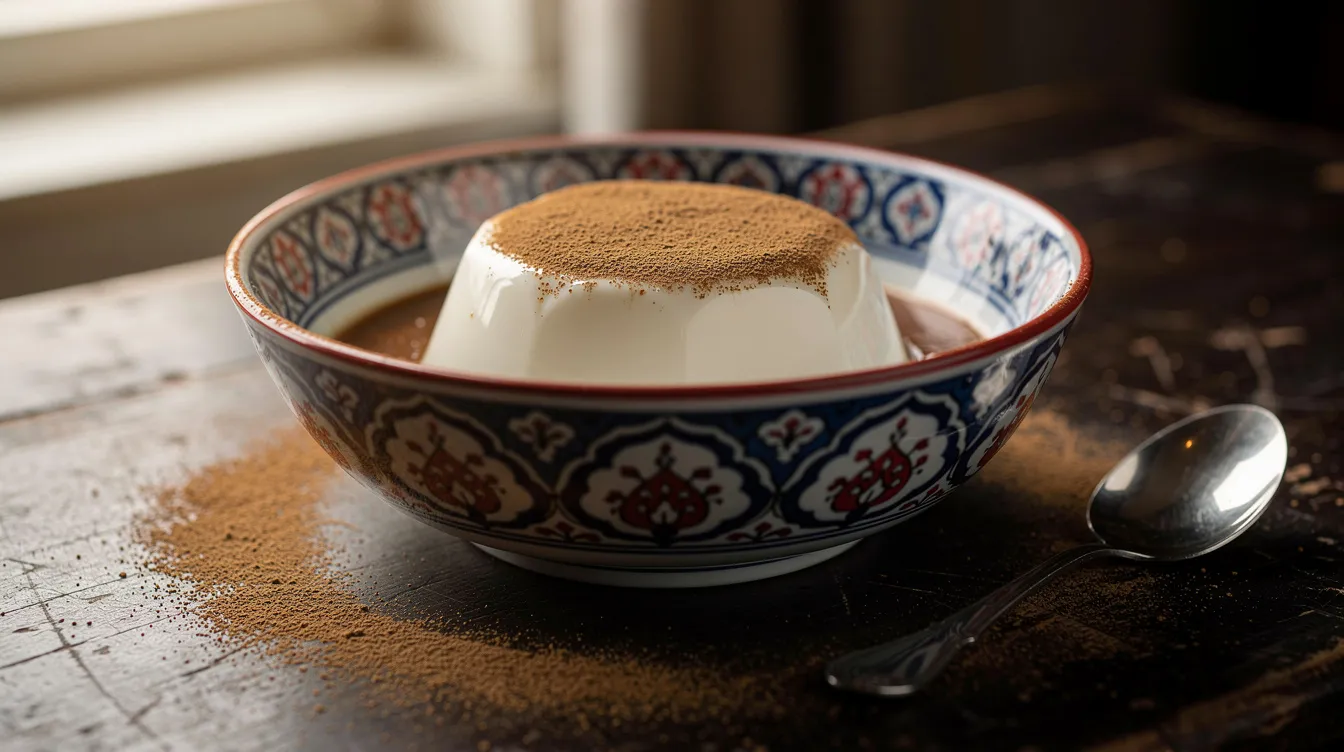
Kazandibi translates to “bottom of the pot” and features a unique caramelized crust-a deliberate scorching of the milk pudding base that transforms a mistake into genius. It’s essentially tavuk göğsü’s dramatic sibling, rolled into elegant ribbons with the burnt side exposed.
Why It Stands Out
The deliberate burning creates a complex caramel flavor layered over the gentle sweetness of the milk pudding. It’s one of those creamy cakes where controlled imperfection produces something extraordinary. The contrast between silky pudding and bitter-sweet caramel is deeply satisfying.
Best For
Those who enjoy caramel flavors and appreciate traditional techniques rooted in ottoman empire kitchen culture.
Key Strengths
- Complex flavor from caramelization that can’t be rushed or faked
- Beautiful presentation-rolled into ribbons showing the dark caramel stripe
- Ottoman palace heritage gives it genuine historical weight
Possible Limitations
- Requires skilled preparation; mass-produced versions lose the burnt layer’s character
- Limited availability in heavily touristed areas; seek out local pudding shops
7. Aşure (Noah’s Pudding)
Aşure is also known as Noah’s pudding, and the legend says it was first cooked aboard the ark using whatever supplies remained. Asure contains grains, nuts, and dried fruits-wheat berries, chickpeas, white beans, dried fruits, pine nuts, walnuts, pomegranate seeds, and more. Aşure typically includes twelve or more ingredients, making each bowl a small universe of textures.
Why It Stands Out
This is noah’s pudding-a dessert with deep cultural and religious significance that transcends flavor. Aşure is traditionally shared during the Islamic month of Muharram, distributed to neighbors regardless of faith as a symbol of unity and community. Asure, or Noah’s pudding, includes grains and dried fruits that create a porridge-like sweet snack unlike anything else.
Best For
Cultural travelers interested in culinary traditions and community sharing. This is the traditional turkish dessert that tells the biggest story.
Key Strengths
- Rich cultural story and symbolism connecting communities across Turkey
- Healthy ingredients: whole grains, legumes, dried fruits, chopped nuts
- Seasonal availability creates a special, limited-time experience
Possible Limitations
- Only available during specific religious periods (Muharram)
- The crumbly texture and unusual ingredient combination may surprise some visitors
8. Şöbiyet
Think of şöbiyet as baklava’s luxurious cousin. This layered pastry variation swaps the standard nut filling for a generous layer of kaymak (clotted cream) alongside ground pistachios, wrapped in crispy phyllo triangles and bathed in syrup.
Why It Stands Out
The creamy filling balances the intense sweetness of traditional baklava, creating a more nuanced experience. Where baklava is all crunch and sweetness, şöbiyet adds a luscious, dairy richness that rounds every bite.
Best For
Baklava lovers wanting a creamier, more sophisticated variation. If you find standard baklava too intensely sweet, şöbiyet is your answer.
Key Strengths
- Less intensely sweet than regular baklava thanks to the cream’s tempering effect
- Rich clotted cream adds a layer of luxury absent in standard varieties
- Beautiful triangular presentation makes it visually distinctive
Possible Limitations
- Higher price than standard baklava due to the fresh cream component
- Shorter shelf life-the cream filling means it must be eaten within a day or two
9. Tulumba
Ridged, finger-shaped pastries, deep fried until golden and immediately plunged into sugar syrup. Tulumba is a popular street dessert in Istanbul, where street vendors serve them warm from bubbling oil, glistening with syrup and crackling with each bite.
Why It Stands Out
This is pure street food indulgence-crispy on the outside, syrup-soaked and tender within. The ridged surface maximizes syrup absorption, ensuring every millimeter carries sweetness. Made from wheat flour and water churned through a piping tip, the technique is simple but the result is addictive.
Best For
Street food enthusiasts wanting a quick, affordable sweet snack fix while exploring Turkish cities. When you’re wandering through Istanbul’s neighborhoods, tulumba is the sweet treat that finds you.
Key Strengths
- Widely available and affordable across Turkey
- Fresh and warm from street vendors-best eaten on the spot
- Authentic local experience far from tourist-trap pricing
Possible Limitations
- Very sweet and sticky-not for those watching sugar intake
- Quality varies between vendors; look for freshly fried batches
10. Pişmaniye
Pişmaniye resembles cotton candy but has a denser texture-a confection of roasted wheat flour, sugar, and melted butter pulled into thousands of hair-thin strands. Pişmaniye is made from roasted flour, sugar, and butter through a laborious pulling process that creates its signature appearance. Unlike regular cotton candy, pişmaniye has substance and a toasted, buttery depth.
Why It Stands Out
This is turkish cotton candy reimagined. The unique texture-somewhere between cotton candy and halva-dissolves on the tongue while delivering rich, caramelized butter flavor. It looks like a bird’s nest and tastes like sweet nostalgia.
Best For
Souvenir seekers and those curious about must-try turkish sweets with unusual textures. It travels well and makes a conversation-starting gift.
Key Strengths
- Melts in the mouth creating a sensation unlike any other confection
- Long shelf life when packaged, perfect for travel
- Distinctive appearance that’s immediately Instagram-worthy
Possible Limitations
- Very delicate and breaks easily during transport
- Limited flavor varieties compared to other turkish desserts
11. Revani
A golden semolina cake soaked in citrus-scented sweet syrup, revani delivers moisture, fragrance, and a satisfying slight grain. Revani is a semolina cake soaked in syrup-traditionally flavored with lemon juice and sometimes rose water. Credited to Ottoman palace chefs, it’s often garnished with ground pistachios or shredded coconut.
Why It Stands Out
Refreshing citrus notes balance the sweetness perfectly, making revani one of the more approachable syrup-soaked desserts. İrmik Helvası is another semolina-based treat made by roasting semolina in butter before cooking it with milk and sugar-a different technique but related spirit.
Best For
Those preferring cake-like desserts over pastries. If you enjoy the idea of a moist, aromatic cake with traditional flavors rather than the intensity of baklava, revani is ideal.
Key Strengths
- Light and refreshing flavor profile compared to heavier pastry desserts
- Moist texture from hours of syrup absorption
- Beautiful golden color, sometimes enhanced with grape molasses
Possible Limitations
- Can become soggy if over-soaked in syrup
- Less distinctive in appearance than other turkish desserts
12. Turkish Ice Cream (Dondurma)
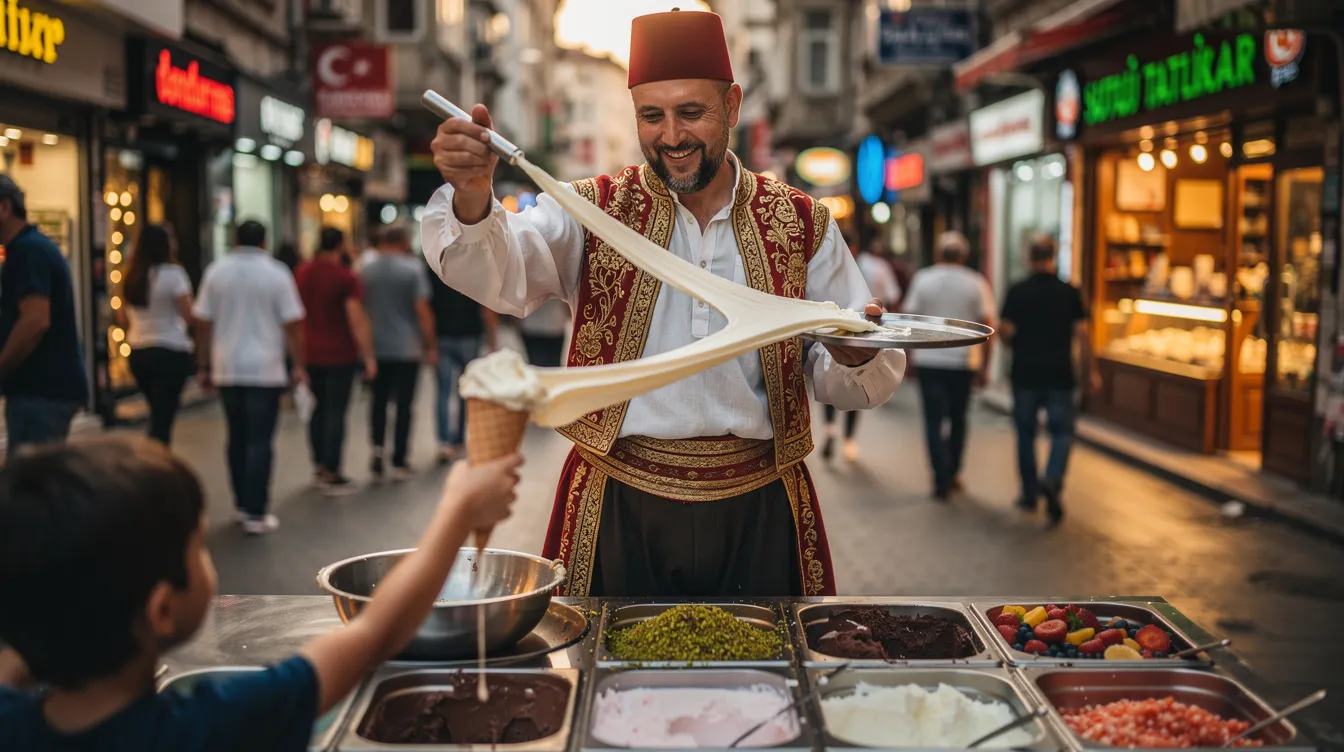
Forget everything you know about ice cream. Dondurma-Turkish ice cream-is made with salep (flour from wild orchids) and mastic resin, giving it an elastic, chewy quality that resists melting. Street vendors in cities like Istanbul turn serving it into theatrical performances, teasing customers with disappearing cones and sticky tricks.
Why It Stands Out
The chewy texture sets dondurma apart from every other frozen dessert on earth. You can stretch it, pull it, even eat it with a knife and fork. The vendor performances-flipping cones, snatching them back, playing games-make buying turkish ice cream an event, not just a transaction.
Best For
Families and anyone wanting a fun, interactive dessert experience. It’s the famous dessert that entertains before you even taste it.
Key Strengths
- Entertaining street performances create lasting memories
- Melts slowly in hot weather thanks to salep and mastic
- Available in many traditional Turkish flavors including pistachio, rose, and mastic
Possible Limitations
- The texture may feel strange for first-timers expecting standard ice cream
- Tourist-focused street vendors may charge premium prices in busy areas
Quick Comparison of Turkish Desserts
| Dessert | Category | Best For |
|---|---|---|
| Baklava | Syrup-soaked | Classic Turkish experience |
| Künefe | Syrup-soaked | Hot, dramatic presentation |
| Turkish Delight | Confection | Souvenirs & coffee pairing |
| Fırın Sütlaç | Milk-based | Light, comforting dessert |
| Tavuk Göğsü | Milk-based | Culinary adventure |
| Kazandibi | Milk-based | Caramel lovers |
| Aşure | Grain-based | Cultural experience |
| Şöbiyet | Syrup-soaked | Creamy baklava variation |
| Tulumba | Deep-fried | Street food experience |
| Pişmaniye | Confection | Unique texture experience |
| Revani | Syrup-soaked | Citrus-scented cake lovers |
| Turkish Ice Cream | Frozen | Family entertainment |
How to Choose the Right Turkish Dessert
Choose Based on Sweetness Level
If you prefer intensely sweet experiences, go for the syrup-soaked category: baklava, künefe, tulumba, and şöbiyet deliver maximum sweetness. Turkish people themselves often balance these with unsweetened tea. For milder options, milk-based desserts like sütlaç, kazandibi, and tavuk göğsü offer gentle sweetness without sugar overload. Güllaç is traditionally popular during Ramadan and made from starch crepes soaked in sweetened milk-another lighter option worth seeking out.
Choose Based on Cultural Experience
For deeper cultural immersion, prioritize aşure during Muharram and baklava during Şeker Bayramı (Sugar Festival). Other turkish desserts like tavuk göğsü connect you to Ottoman palace culture, while lokum ties into centuries of coffeehouse tradition. Turkish pumpkin dessert (kabak tatlısı) is another seasonal favorite often drizzled with tahini and walnuts.
Choose Based on Availability
Baklava, turkish delight, sütlaç, and tulumba are everywhere-available in virtually every Turkish city. Regional specialties like authentic künefe are best experienced in Hatay, while the finest baklava demands a trip to Gaziantep. When visiting Istanbul, you’ll find strong versions of nearly everything, though Istanbul dessert spots range wildly in quality.
Which Turkish Dessert Is Best for You?
- Choose Baklava if you want the quintessential best sweets in Turkey experience-the thin layers of phyllo, the fragrant pistachios, the dripping syrup
- Choose Künefe if you seek a unique hot cheese and syrup combination that exists nowhere else
- Choose Turkish Delight if you want authentic souvenirs and the perfect turkish coffee pairing
- Choose Milk-based desserts (sütlaç, kazandibi, tavuk göğsü) if you prefer lighter, cooler options that won’t overwhelm after a full meal
For a comprehensive list of the best traditional Turkish desserts with ordering tips, our dedicated desserts page goes even deeper.
Pro Tips: What to Drink with Turkish Desserts
The right drink transforms a good dessert into a perfect moment. Here’s what turkish people know instinctively:
- Turkish tea pairs perfectly with syrup-soaked desserts. The tannins in strong black tea cut through the sweetness of baklava, künefe, and tulumba, resetting your palate between bites. This is why every baklava shop serves tea automatically.
- Turkish coffee is traditionally served with turkish delight. The bitter intensity of the coffee and the gentle sweetness of lokum create a balanced ritual that has defined Turkish social life for centuries.
- Salep (a warm, creamy orchid-root drink) pairs beautifully with lighter desserts, especially during winter months.
- Timing matters: milk-based desserts are ideal after lunch or dinner, while syrup-soaked pastries and ice cream work best as afternoon sweet snacks during sightseeing breaks.
When ordering in local establishments, simply say the dessert name and add “bir çay lütfen” (one tea, please). Staff will understand-and appreciate-that you know the pairing.
If you’re planning a trip that combines these culinary experiences with Turkey’s historical sites and landscapes, our complete Turkey travel guide covers everything from logistics to excursions from Istanbul.
Conclusion
This turkish desserts guide barely scratches the surface of a culinary tradition spanning millennia. From the shattering crunch of Gaziantep’s pistachio baklava to the molten stretch of Hatay’s künefe, from the unexpected elegance of chicken breast pudding to the communal warmth of noah’s pudding-every must-try turkish sweet carries centuries of culture, trade, and tradition in each bite.
The best sweets in Turkey aren’t found in a single shop or city. They’re discovered across regions, seasons, and moments-at a street vendor’s cart at dusk, in a historic patisserie at dawn, or shared with strangers during Muharram. Pack your appetite, loosen your belt, and let Turkey’s desserts turn your trip into something unforgettable.
What’s the first Turkish dessert you’d try? Save this guide for your next trip, share it with fellow food lovers, and let us know your favorites.
Comments